"American Amazigh" examines the complex identity negotiations of Amazigh people—also known as Berbers—as they build community and claim visibility in the American landscape. Their experience unsettles categories of race and ethnicity in the U.S. and disrupt familiar immigration narratives, revealing the complexities and challenges of legal migration processes such as family reunification and the Diversity Immigrant Visa program.
In seeking to make their struggles for recognition legible within the American context, they grapple with conditional belonging while also bearing the legacy of marginalization in their home countries, which is rooted in colonial divisions, postcolonial nationalism, and Arabization policies, fostering systemic discrimination. In the diaspora, Amazigh identity is being actively reshaped as individuals and organizations engage with new ideological frameworks, global Indigenous rights movements, and recent political gains in North Africa, where they have long fought for linguistic, cultural, and legal equality.
Drawing on years of ethnographic research, the book explores how the Amazigh people forge new anchors of belonging and create spaces of social cohesion. By uncovering both the opportunities and challenges presented in the American context, the book moves beyond conventional migration narratives to illuminate how identity and belonging are continually translated and reconfigured within new places.
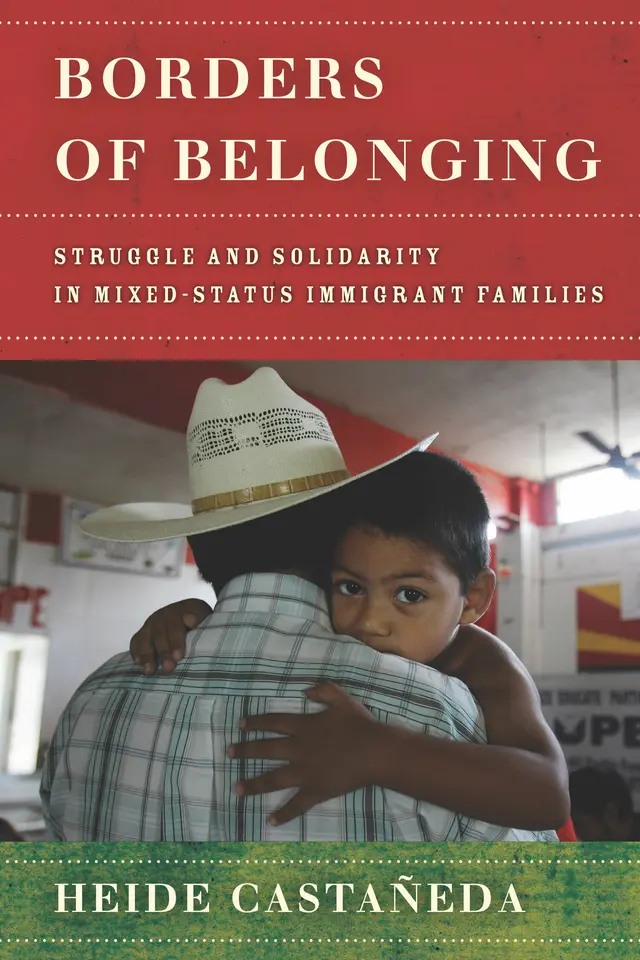
"Borders of Belonging" investigates a pressing but previously unexplored aspect of immigration in America—the impact of immigration policies and practices not only on undocumented migrants, but also on their family members, some of whom possess a form of legal status. This book reveals the trauma, distress, and inequalities that occur daily, alongside the stratification of particular family members' access to resources like education, employment, and health care. She also paints a vivid picture of the resilience, resistance, creative responses, and solidarity between parents and children, siblings, and other kin.
This innovative ethnography combines fieldwork with individuals and family groups to paint a full picture of the experiences of mixed-status families as they navigate the emotional, social, political, and medical difficulties that inevitably arise when at least one family member lacks legal status. Exposing the extreme conditions in the heavily-regulated U.S./Mexico borderlands, this book presents a portentous vision of how the further encroachment of immigration enforcement would affect millions of mixed-status families throughout the country.
This new book calls for a radical rethinking of the field by unsettling ideas about migration, mobility, and borders to explore the ways in which they produce health inequalities.
It covers a wide breadth of the topics, offering a foundation for anyone interested in current issues and debates in a variety of contexts.
Among other contributions, a critical approach is attentive to structural conditions of inequality and larger historical and political processes; recognizes that many exclusionary bordering practices occur away from physical points of entry; conceptualizes migration processes as complex, tangled, and multidirectional; understands that migrant vulnerability shapes the lives of people in wider communities; and acknowledges diverse and intersectional standpoints, as well as shifting spatial and temporal influences.
The book provides insights from a critical perspective, proposed areas of intervention, and future research needs to tackle the health inequities that affect migrants globally.